Flora & Fauna
The Mallee is one of Victoria's most distinctive ecosystems — semi-arid mallee woodlands, spinifex and saltbush country that's home to species found almost nowhere else. Here are 17 native plants and 48 animals you'll find across the Murray-Sunset, Hattah-Kulkyne and Wyperfeld national parks and the surrounding mallee country.
Photos via Wikimedia Commons (credited on each card). Click through to each species' authoritative source for full details.
Where to see them
Where to see it — nature & parks map
- Murray-Sunset National Park: Victoria's second-largest national park — vast mallee woodlands, semi-arid plains, and the famous pink-hued Pink Lakes.
- Hattah-Kulkyne National Park: A Ramsar-listed wetland and mallee scrub reserve fed by Murray River floodwaters, known for its chain of lakes and abundant birdlife.
- Wyperfeld National Park: One of Victoria's largest inland parks, protecting mallee and Belah woodlands, dry lakebeds, and a stronghold for the endangered Malleefowl.
- Lake Tyrrell: Victoria's largest salt lake, near Sea Lake, prized for its mirror-like reflections and dark-sky stargazing.
- Lake Albacutya: A large ephemeral lake within Lake Albacutya Park that fills only after major Wimmera River flooding, supporting red gum woodland and waterbirds.
- Kings Billabong: A Murray River billabong reserve on Mildura's doorstep, popular for walking trails, birdwatching, and river red gum forest.
- Big Desert Wilderness Park: A remote, roadless wilderness of mallee and spinifex dunes on the South Australian border, home to rare reptiles and the Mallee Emu-wren.
- Murray River — Mildura reserves: River red gum forests and reserves lining the Murray at Mildura, offering paddling, houseboating, and riverside walking trails.
- Murray River — Robinvale: A stretch of the Murray near Robinvale bordered by wetlands and irrigated orchards, popular for fishing and water sports.
- Annuello Flora and Fauna Reserve: A remnant mallee reserve near Annuello protecting Buloke and mallee woodland habitat for threatened woodland birds.
- Wathe Flora and Fauna Reserve: A mallee scrub reserve between Ouyen and Manangatang supporting Malleefowl and other dryland wildlife.
- Pink Lakes: A cluster of striking pink-tinged salt lakes within Murray-Sunset National Park, coloured by algae and once mined for salt.
The national parks, reserves and natural attractions where you're most likely to encounter the Mallee's plants and animals.
Plants
Trees & Mallee Eucalypts

Buloke
Allocasuarina luehmannii
A slow-growing, drought-tolerant sheoak with dark, deeply fissured bark, once widespread across the Mallee's heavier soils. Buloke woodland is now listed as a nationally threatened ecological community, and the tree is critical habitat for the endangered Red-tailed Black-Cockatoo.
Photo: Ethel Aardvark / Wikimedia Commons (CC BY 3.0)

Belah
Casuarina pauper
A hardy, drooping-branched sheoak that forms open woodlands on the Mallee's heavier, often saline soils, frequently growing alongside Buloke and Black Box on the region's floodplains and plains.
Photo: John Tann / Wikimedia Commons (CC BY 2.0)

Desert Banksia
Banksia ornata
A medium shrub-to-small-tree with serrated leaves and large, spiky yellow-green flower spikes, found in sandy heathy woodland pockets of the Victorian Mallee such as Wyperfeld and Big Desert. It provides a key nectar source for honeyeaters and other pollinators.
Photo: Casliber / Wikimedia Commons (public domain)

Mallee Pine
Callitris verrucosa
A slow-growing, multi-stemmed native conifer with grey-green, warty cones, forming dense stands (mallee pine scrub) across the sandy woodlands of Murray-Sunset, Hattah-Kulkyne and Wyperfeld National Parks.
Photo: Wikimedia Commons (photographed in Wyperfeld National Park)

Red Mallee
Eucalyptus socialis
One of the classic multi-stemmed 'mallee' eucalypts, growing from a woody underground lignotuber (mallee root) that lets it resprout after fire or drought — the defining growth form that gives the Mallee region its name.
Photo: Mark Marathon / Wikimedia Commons (CC BY-SA 4.0)

White Mallee
Eucalyptus dumosa
A widespread multi-stemmed mallee eucalypt with smooth grey-white upper bark and flaky bark near the base, dominant across huge tracts of the Victorian Mallee's sandy and loamy woodlands.
Photo: Murray Fagg / Wikimedia Commons (CC BY 3.0 AU)

Quandong
Santalum acuminatum
A small hemiparasitic tree that taps the roots of nearby plants for water and nutrients, producing bright red, tart edible fruit prized as a bush food across the Mallee and central Australia.
Photo: John Moss / Wikimedia Commons (public domain)

White Cypress Pine
Callitris glaucophylla
A tall, columnar native conifer with soft blue-green foliage, forming open woodlands on the sandier rises of the Mallee and along the Murray River corridor, historically prized for its termite-resistant timber.
Photo: Margaret Donald / Wikimedia Commons (CC BY-SA 2.0)
Shrubs & Understorey

Sandhill Wattle
Acacia ligulata
A dense, rounded wattle with bright yellow flower heads that stabilises sand dunes and sandy rises across the Mallee, including Murray-Sunset and Hattah-Kulkyne. Its seed pods and foliage are an important food source for local birds and insects.
Photo: Murray Fagg / Wikimedia Commons (CC BY 3.0)

Old Man Saltbush
Atriplex nummularia
A large, silvery-grey woody shrub of the saltbush family that grows on the heavier clay soils of the semi-arid Mallee plains. It has long been valued as drought-hardy stock fodder in the region.
Photo: Cgoodwin / Wikimedia Commons (CC BY-SA 3.0)

Native Hop Bush
Dodonaea viscosa
A resinous, sticky-leaved shrub found through the Mallee's woodlands and dune country, with distinctive papery, winged seed capsules once used by settlers as a hops substitute in brewing.
Photo: J.M.Garg / Wikimedia Commons (CC BY 3.0)

Silver Emu-bush
Eremophila scoparia
A broom-like, silvery-grey Mallee emu-bush with narrow hooked leaves and small lilac-to-white flowers, common and widespread on the region's sandy and gravelly plains.
Photo: Geoff Derrin / Wikimedia Commons (CC BY-SA 4.0)

Ruby Saltbush
Enchylaena tomentosa
A small, soft-leaved saltbush with fleshy red or yellow berries, common in Mallee woodland understorey and a traditional bush food for Aboriginal people of the region.
Photo: Melburnian / Wikimedia Commons (CC BY-SA 3.0)

Pearl Bluebush
Maireana sedifolia
A compact, silver-white shrub with fleshy leaves that forms low chenopod shrublands on the heavier, calcareous soils of the Victorian Mallee's drier plains, often alongside saltbush.
Photo: Stan Shebs / Wikimedia Commons (CC BY-SA 3.0)
Grasses, Wildflowers & Groundcover

Porcupine Grass (Spinifex)
Triodia scariosa
A spiny, hummock-forming perennial grass that grows in dense mounds on sandy Mallee soils, providing shelter for reptiles and small mammals such as the Mallee ningaui and helping stabilise dunes.
Photo: Simpson81 / Wikimedia Commons (CC BY-SA 4.0)

Orange Immortelle
Waitzia acuminata
An annual paper daisy with papery orange-yellow everlasting flowers that carpets sandy Mallee plains and dune country after good rains — part of the wildflower displays for which Hattah-Kulkyne and Wyperfeld are known each spring.
Photo: Raygday / Wikimedia Commons (CC BY-SA 3.0)

Inland Pigface
Carpobrotus modestus
A trailing, fleshy-leaved succulent groundcover with bright purple daisy-like flowers, found on sandy and coastal-influenced soils across semi-arid inland Australia including the Mallee, where its fruit was traditionally eaten.
Photo: Lazaregagnidze / Wikimedia Commons (CC BY-SA 3.0)
Animals
Birds

Apostlebird
Struthidea cinerea
A grey, quick-moving communal bird that travels in noisy family groups of around a dozen (hence the name) through Mallee woodlands, building large mud-and-grass nests on horizontal branches.
Photo: JJ Harrison / Wikimedia Commons (CC BY-SA 4.0)

Australian Ringneck (Mallee Ringneck)
Barnardius zonarius
A brightly coloured parrot common through Mallee woodland and scrub; the local 'mallee ringneck' form has a yellow-green body, blue cheeks and a black head.
Photo: JJ Harrison / Wikimedia Commons (CC BY-SA 4.0)

Black-eared Miner
Critically EndangeredManorina melanotis
One of Australia's rarest birds, this honeyeater is restricted to old-growth mallee with a spinifex understorey and survives in the Victorian Mallee parks including Murray-Sunset and Wyperfeld, where hybridisation with the Yellow-throated Miner is an ongoing conservation concern.
Photo: Ron Knight / Wikimedia Commons (CC BY 2.0)

Chestnut-crowned Babbler
Pomatostomus ruficeps
A sociable, ground-foraging bird of arid and semi-arid woodland in north-west Victoria that lives in cooperatively breeding groups and builds distinctive domed stick nests.
Photo: JJ Harrison / Wikimedia Commons (CC BY-SA 4.0)

Major Mitchell's Cockatoo
VulnerableLophochroa leadbeateri
Also known as the Pink Cockatoo, this striking white-and-salmon-pink cockatoo with a red-and-yellow crest is a sought-after sight in Murray-Sunset and Hattah-Kulkyne, feeding on the seeds of native pines and eucalypts.
Photo: JJ Harrison / Wikimedia Commons (CC BY-SA 4.0)

Mallee Emu-wren
EndangeredStipiturus mallee
A tiny, almost flightless wren found only in dense, unburnt spinifex understorey of mallee woodland in north-west Victoria and adjoining South Australia; its Victorian stronghold is Murray-Sunset and Wyperfeld National Parks.
Photo: Ron Knight / Wikimedia Commons (CC BY 2.0)

Malleefowl
VulnerableLeipoa ocellata
The Mallee's namesake and most iconic bird, this stocky ground-dwelling megapode incubates its eggs in huge mounds of raked-up litter and sand rather than by sitting on them, relying on decomposition heat regulated by the male.
Photo: JJ Harrison / Wikimedia Commons (CC BY-SA 4.0)

Purple-gaped Honeyeater
Lichenostomus cratitius
A honeyeater endemic to semi-arid southern Australia, favouring mallee, heath and low eucalypt woodland with a shrubby understorey across the Victorian Mallee.
Photo: JJ Harrison / Wikimedia Commons (CC BY-SA 4.0)

Red-capped Robin
Petroica goodenovii
A small, brightly coloured robin of drier scrub and open mallee woodland; males display a vivid scarlet cap and breast against black-and-white plumage.
Photo: JJ Harrison / Wikimedia Commons (CC BY-SA 3.0)

Regent Parrot
VulnerablePolytelis anthopeplus
A slender, mostly yellow parrot with a green tail that nests in tall river red gums along the Murray and forages in Mallee woodland; the Victorian Mallee population is part of a listed threatened eastern subspecies.
Photo: Peripitus / Wikimedia Commons (CC BY-SA 3.0)

Shy Heathwren
Hylacola cauta
A small, secretive ground-dwelling bird found mostly in mallee woodland with a dense shrub and heath understorey, more often heard than seen as it forages low in the vegetation.
Photo: Scottwilliamsoutdoors / Wikimedia Commons (CC BY-SA 4.0)
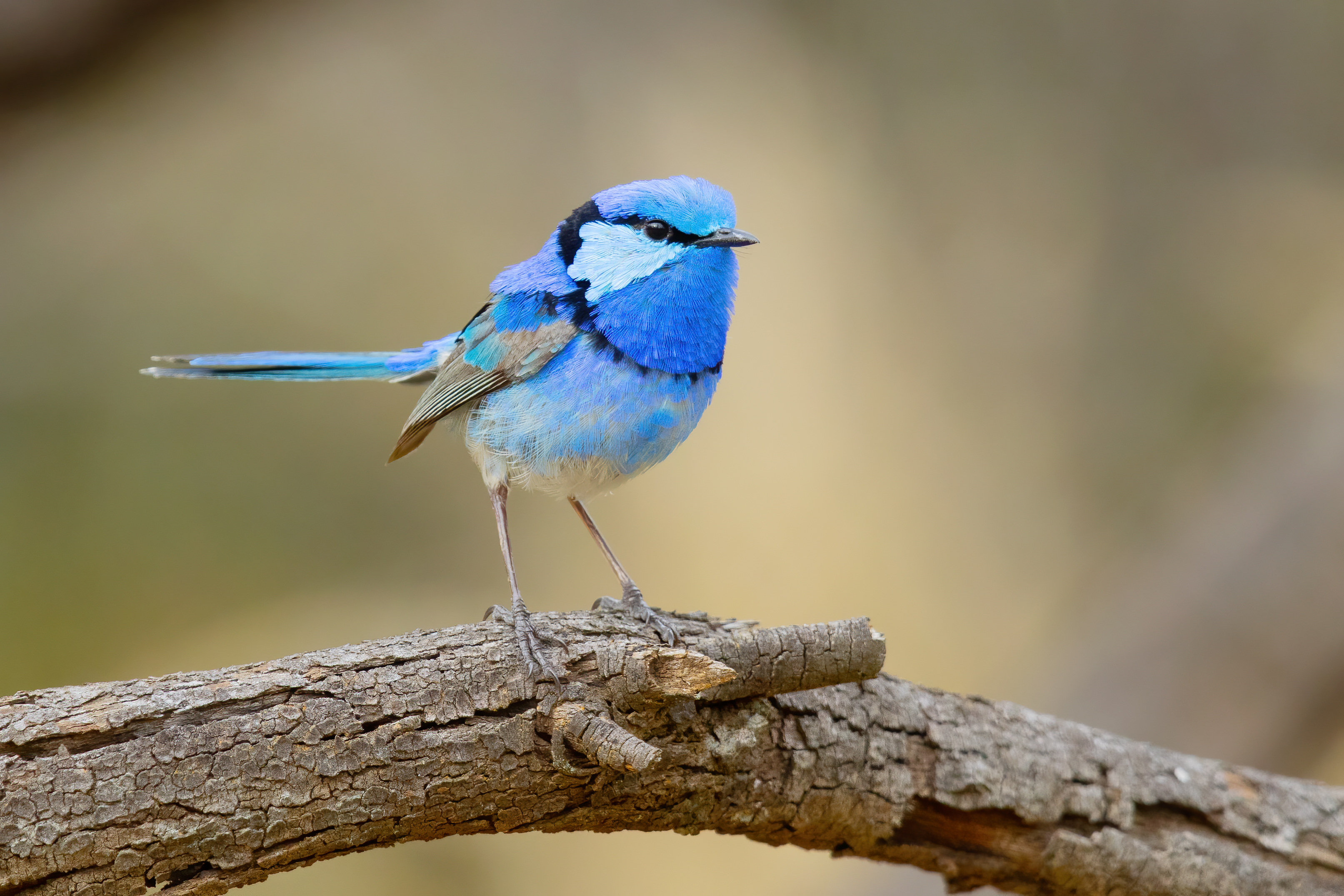
Splendid Fairywren
Malurus splendens
Known for the male's dazzling all-blue breeding plumage, this small wren lives in family groups through Mallee scrub and spinifex, foraging low to the ground for insects.
Photo: JJ Harrison / Wikimedia Commons (CC BY-SA 3.0)

Spotted Bowerbird
Chlamydera maculata
A mid-sized, camouflaged bowerbird of drier inland woodlands; males build and decorate stick avenue bowers with bones, shells and other pale objects to attract mates.
Photo: Greg Miles / Wikimedia Commons (CC BY-SA 2.0)

White-browed Treecreeper
Climacteris affinis
The smallest and most arid-adapted of the Australo-Papuan treecreepers, it forages by climbing the trunks and branches of mallee eucalypts and native pines in search of invertebrates.
Photo: Peter Jacobs / Wikimedia Commons (CC BY-SA 2.0)
Mammals

Fat-tailed Dunnart
Sminthopsis crassicaudata
A tiny, mouse-like carnivorous marsupial that stores fat in its tail as a reserve against food shortages; it shelters by day in soil cracks, logs and disused burrows across the Mallee's open plains.
Photo: Connor Margetts / Wikimedia Commons (CC BY 4.0)

Little Pygmy-possum
Cercartetus lepidus
The world's smallest possum, weighing only a few grams; it occurs at low density in mallee and dry woodland with a shrubby understorey, feeding on nectar, pollen and small invertebrates.
Photo: Heath Warwick / Museums Victoria (CC BY 4.0)

Mitchell's Hopping-mouse
Notomys mitchellii
The largest surviving hopping-mouse species, a bipedal rodent that digs deep burrow systems in sandy Mallee soils and emerges at night to feed on seeds, leaves and insects.
Photo: Nicole Kearney / Wikimedia Commons (CC BY 4.0)

Red Kangaroo
Osphranter rufus
Australia's largest marsupial, common across the drier, more open Mallee plains and shrublands where it grazes in mobs at dawn and dusk, sheltering under mallee eucalypts through the heat of the day.
Photo: fir0002 / Wikimedia Commons (GFDL 1.2)

Short-beaked Echidna
Tachyglossus aculeatus
A spine-covered, egg-laying monotreme found throughout the Mallee's woodlands and shrublands, using its long snout and sticky tongue to feed on ants and termites and powerful claws to dig for cover.
Photo: Fir0002 / Wikimedia Commons (GFDL 1.2)

Western Grey Kangaroo
Macropus fuliginosus
A large, grazing kangaroo common in Mallee woodlands and adjacent farmland, often seen in mobs sheltering among belah and mallee eucalypts during the day.
Photo: Charles J. Sharp / Wikimedia Commons (CC BY-SA 4.0)

Western Pygmy-possum
Cercartetus concinnus
A small nocturnal marsupial that forages both in shrubs and on the ground for nectar, pollen and invertebrates, sheltering by day in tree hollows, bark crevices or abandoned bird nests across Mallee habitat.
Photo: Ian R McCann / Museums Victoria (CC BY-SA 4.0)
Reptiles

Carpet Python (Murray-Darling form)
EndangeredMorelia spilota metcalfei
A large constricting python found in a small, disjunct population along the Murray River near Robinvale and Hattah-Kulkyne, sheltering in river red gum hollows, logs and rock crevices; the Victorian population is critically threatened due to its restricted range.
Photo: Amos T Fairchild / Wikimedia Commons (CC BY-SA 3.0)

Central Bearded Dragon
Pogona vitticeps
A large, spiny-scaled dragon of arid and semi-arid inland Australia, found basking on fence posts, fallen timber and open ground in the drier Mallee shrublands and woodlands of north-west Victoria.
Photo: Frank C. Müller / Wikimedia Commons (CC BY-SA 2.5)

Mallee Dragon
Ctenophorus fordi
A small, sand-dwelling dragon lizard endemic to the mallee and spinifex country of southern Australia, active on hot open sand between shrubs and rarely seen far from mallee habitat.
Photo: Rolf Lawrenz / Wikimedia Commons (CC BY 4.0)

Sand Goanna (Gould's Monitor)
Varanus gouldii
A large, powerfully built monitor lizard that digs deep burrows in sandy Mallee soils and forages widely on the ground for carrion, eggs, insects and small vertebrates.
Photo: John Tann / Wikimedia Commons (CC BY 2.0)
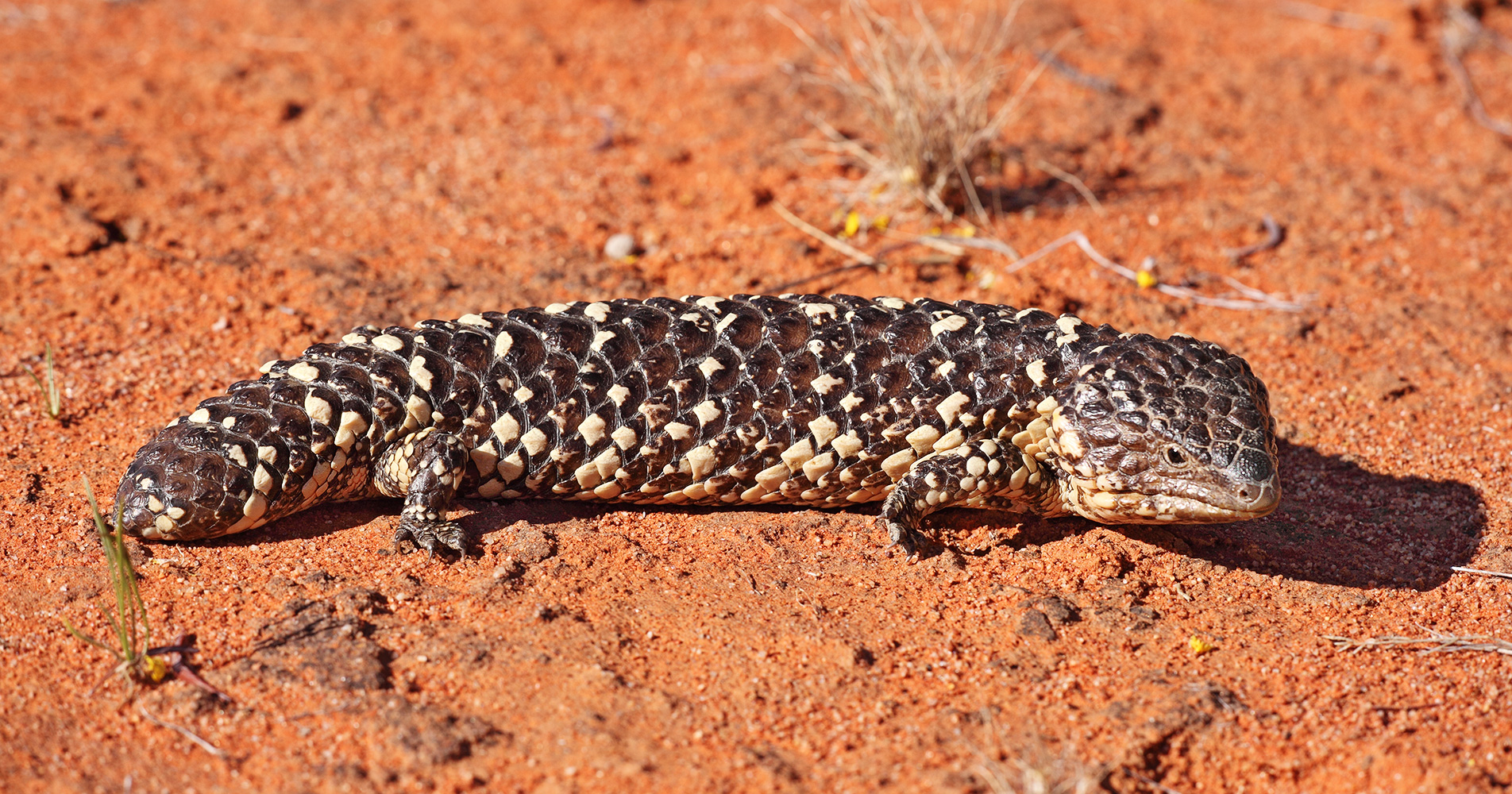
Shingleback
Tiliqua rugosa
A slow-moving, short-tailed blue-tongued skink with rough, pinecone-like scales, commonly seen crossing tracks and roads in the Mallee during warmer months; pairs often stay together for the breeding season.
Photo: Benjamint444 / Wikimedia Commons (GFDL 1.2)
Fish & Aquatic

Murray Cod
VulnerableMaccullochella peelii
Australia's largest exclusively freshwater fish and the apex predator of the Murray-Darling system, this mottled green giant lurks around snags and undercut banks in the Murray and its Mallee tributaries.
Photo: fir0002 / Wikimedia Commons (GFDL 1.2)

Golden Perch (Yellowbelly)
Macquaria ambigua
A deep-bodied, gold-flanked native fish widespread through the Murray-Darling system, prized by anglers along the Mallee's river frontages and known locally as callop or yellowbelly.
Photo: Codman / Wikimedia Commons (CC BY-SA 3.0)

Silver Perch
Critically EndangeredBidyanus bidyanus
A schooling, silvery native fish once abundant throughout the Murray-Darling basin, now much reduced in the wild and supported in the Mallee reach by stocking and habitat restoration programs.
Photo: NSW Department of Primary Industries / Wikimedia Commons (Public domain)
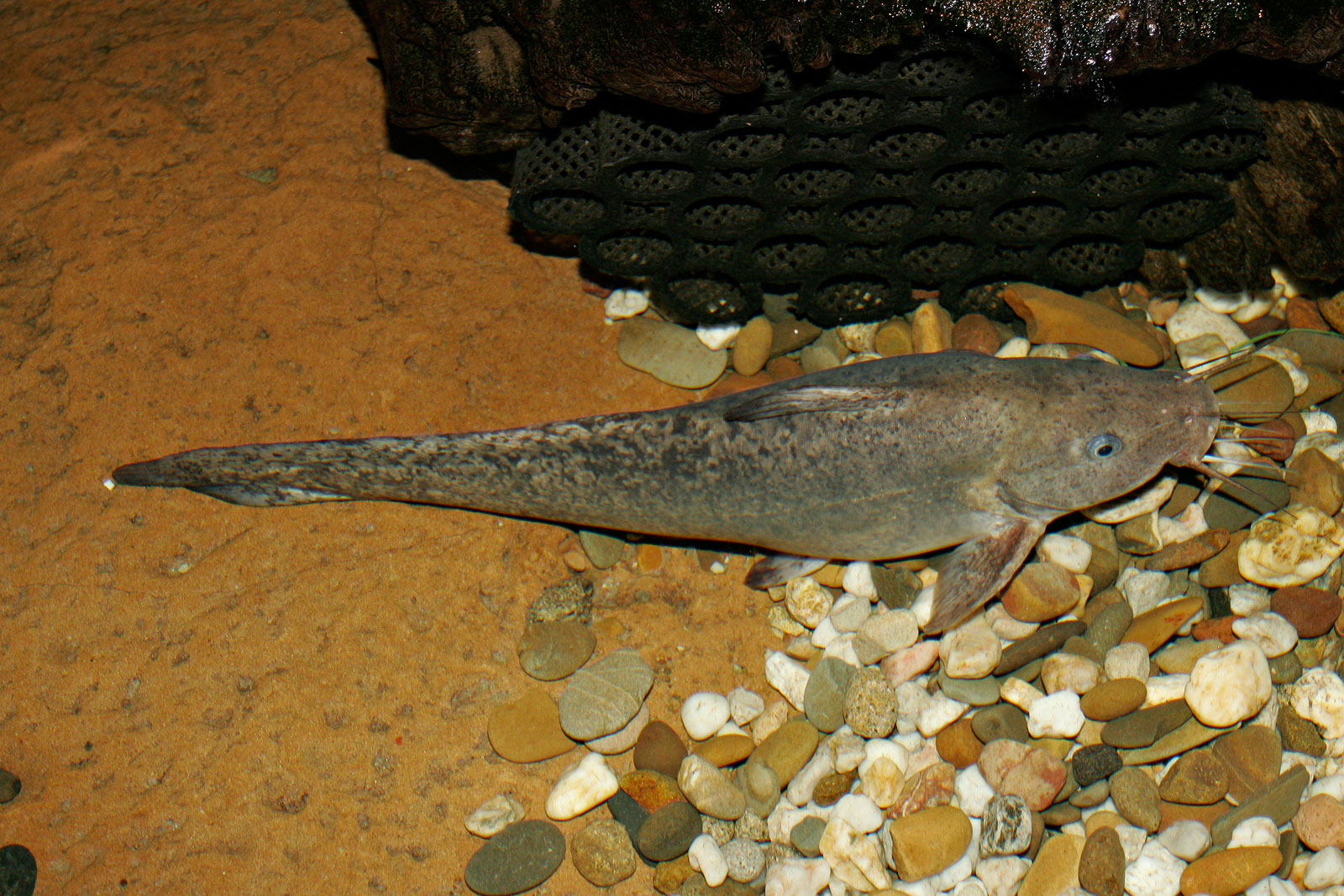
Freshwater Catfish (Eel-tailed Catfish)
VulnerableTandanus tandanus
A bottom-dwelling native catfish with a long eel-like tail, once common in Mallee billabongs and slow river reaches, where it builds distinctive circular gravel nests to spawn.
Photo: fir0002 / Wikimedia Commons (GFDL 1.2)

Murray-Darling Rainbowfish
Melanotaenia fluviatilis
A small, iridescent schooling fish endemic to the Murray-Darling basin, common in the calmer edges and backwaters of the Mallee's rivers and creeks.
Photo: Bahudhara / Wikimedia Commons (CC BY-SA 3.0)
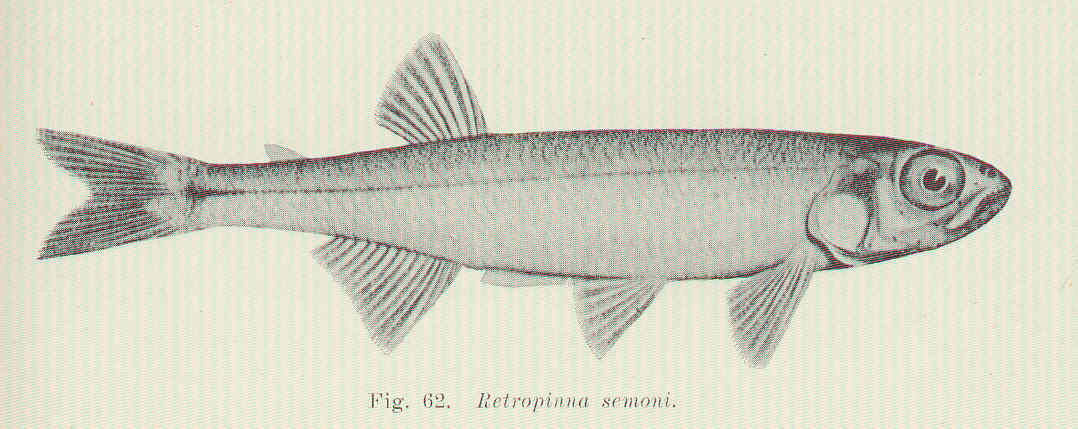
Australian Smelt
Retropinna semoni
A small, short-lived silvery fish found in huge schools throughout the Murray-Darling system, forming an important food source for larger native fish in the Mallee's waterways.
Photo: Edgar Ravenswood Waite / Wikimedia Commons (Public domain)

Bony Bream (Bony Herring)
Nematalosa erebi
A deep-bodied, plankton-feeding native fish that forms dense shoals in the Murray and its Mallee billabongs, and is a key forage species for Murray cod and golden perch.
Photo: Tim / Wikimedia Commons (CC BY 4.0)
Insects

Bogong Moth
EndangeredAgrotis infusa
A night-flying moth whose caterpillars feed on winter pasture and crops across the Mallee's plains before the adults migrate in spring toward the alpine caves of the Australian Alps.
Photo: Donald Hobern / Wikimedia Commons (CC BY 2.0)

Australian Painted Lady
Vanessa kershawi
A common orange-and-black butterfly seen fluttering across Mallee roadsides and paddocks, its populations booming after good rains when its everlasting-daisy host plants flower.
Photo: fir0002 / Wikimedia Commons (GFDL 1.2)

Meadow Argus
Junonia villida
A fast-flying, eye-spotted butterfly found across the Mallee's open grasslands and disturbed ground, readily identified by the large dark eyespots on each wing.
Photo: JJ Harrison / Wikimedia Commons (CC BY-SA 3.0)

Orchard Swallowtail
Papilio aegeus
A large black-and-white swallowtail butterfly whose caterpillars feed on citrus leaves, occasionally seen around Mallee towns and orchards where citrus trees are grown.
Photo: Summerdrought / Wikimedia Commons (CC BY-SA 4.0)
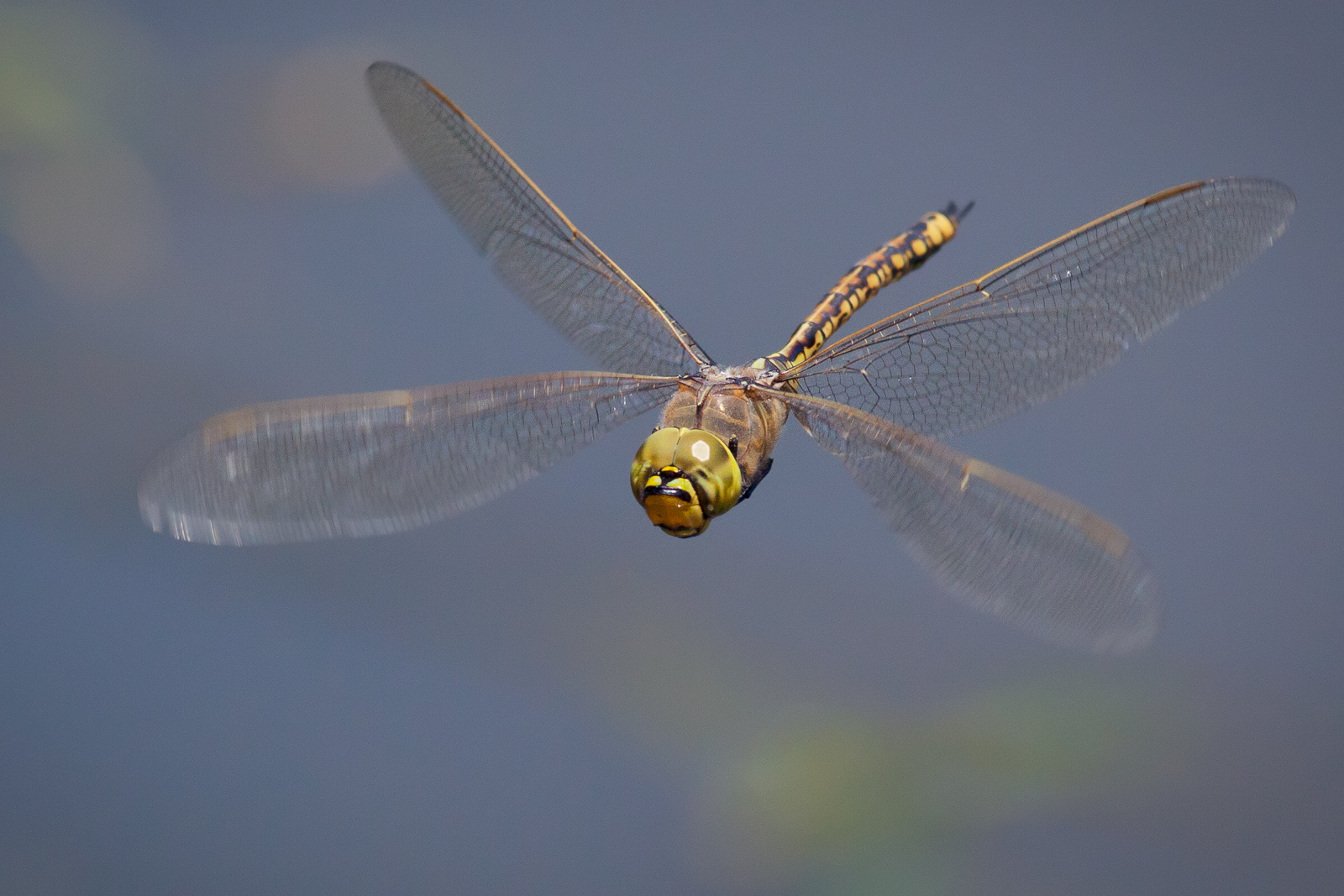
Australian Emperor Dragonfly
Anax papuensis
A large, fast-flying yellow-and-black dragonfly that patrols Mallee wetlands, billabongs and irrigation channels, hunting other flying insects on the wing.
Photo: fir0002 / Wikimedia Commons (GFDL 1.2)

Common Brown Butterfly
Heteronympha merope
A medium-sized brown butterfly common through Mallee grassy woodland in late summer, with females noticeably larger and paler than the darker, faster-flying males.
Photo: Charles J. Sharp / Wikimedia Commons (CC BY-SA 4.0)
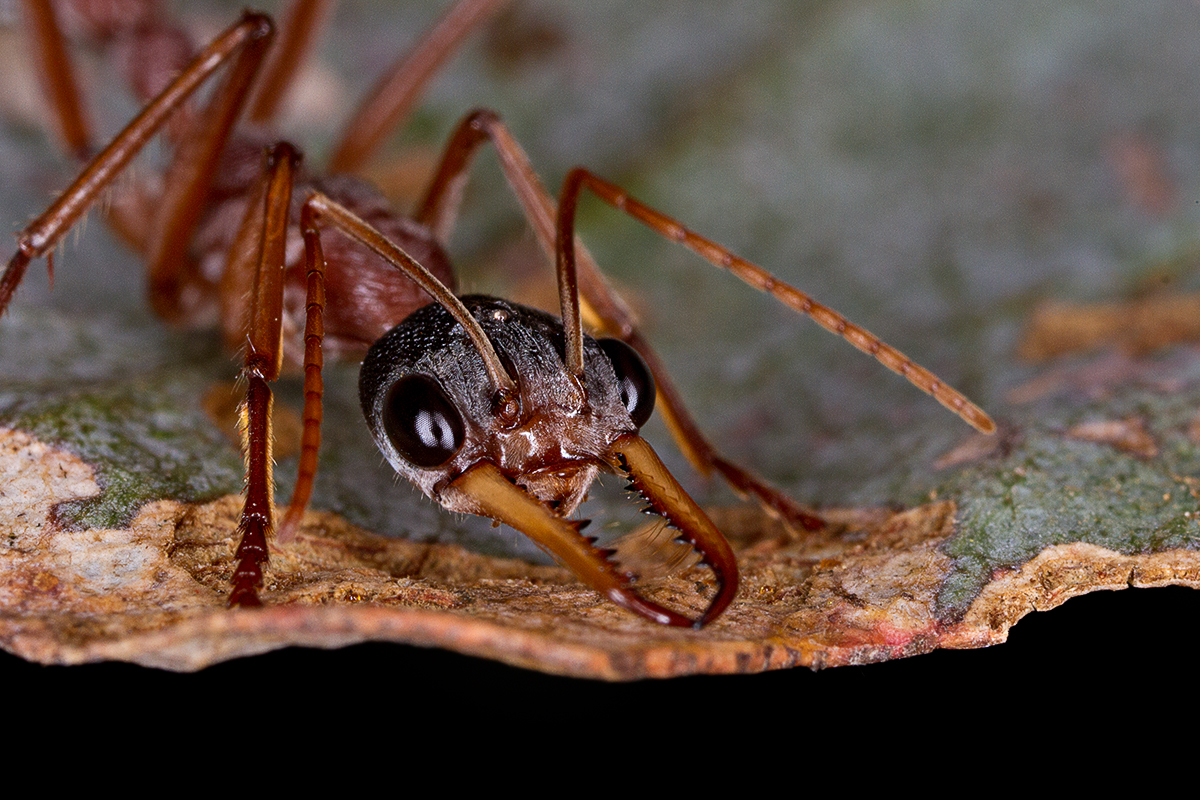
Black-headed Bull Ant
Myrmecia nigriceps
A large, solitary-hunting bull ant with a distinctive black head, found in sandy Mallee soils where it excavates nests and delivers a notably painful sting if disturbed.
Photo: patrickkavanagh / Wikimedia Commons (CC BY 2.0)
Spiders & Other Invertebrates

Wishbone (Trapdoor) Spider
Aname sp.
A burrowing mygalomorph spider of the mallee sandplains that digs a silk-lined, forked burrow with no lid, ambushing passing insects at its entrance after dark.
Photo: Mark Harvey / Wikimedia Commons (CC BY 4.0)

Black Rock Scorpion
Urodacus manicatus
A robust, dark-bodied scorpion that shelters by day under rocks, bark and fallen timber across the Mallee, emerging at night to hunt insects and other invertebrates.
Photo: Mark Norman / Wikimedia Commons (CC BY 4.0)

Garden Wolf Spider
Tasmanicosa godeffroyi
A large, ground-dwelling wolf spider common in Mallee soils, recognisable at night by its eyeshine reflecting torchlight from the entrance of its silk-lined burrow.
Photo: CSIRO / Wikimedia Commons (CC BY 3.0)

Redback Spider
Latrodectus hasselti
A small, highly venomous spider recognised by the female's glossy black body and red dorsal stripe, common around Mallee sheds, woodpiles and outdoor furniture.
Photo: Toby Hudson / Wikimedia Commons (CC BY-SA 3.0)
Frogs & Amphibians
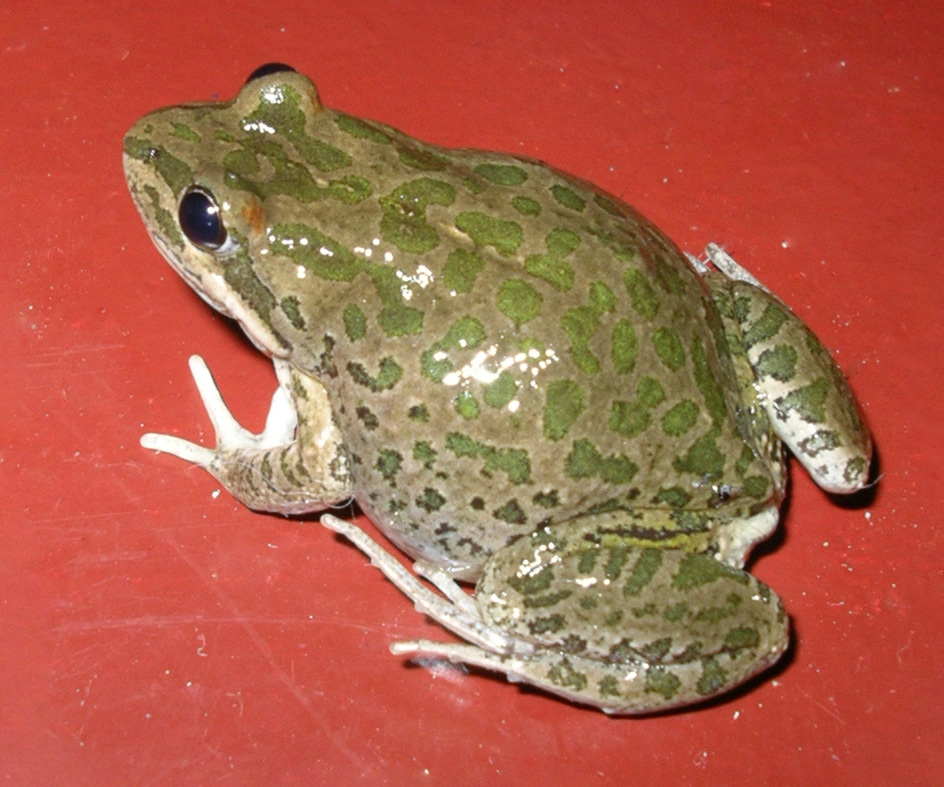
Spotted Marsh Frog
Limnodynastes tasmaniensis
A small, variably patterned ground frog common in Mallee wetlands, dams and flooded roadside ditches, calling with a sharp "tok" note after rain.
Photo: LiquidGhoul / Wikimedia Commons (CC BY-SA 3.0)

Eastern Banjo Frog (Pobblebonk)
Limnodynastes dumerilii
A large, burrowing frog named for its distinctive banjo-string "bonk" call, heard around Mallee dams, billabongs and flooded depressions after warm rain.
Photo: JJ Harrison / Wikimedia Commons (CC BY-SA 4.0)
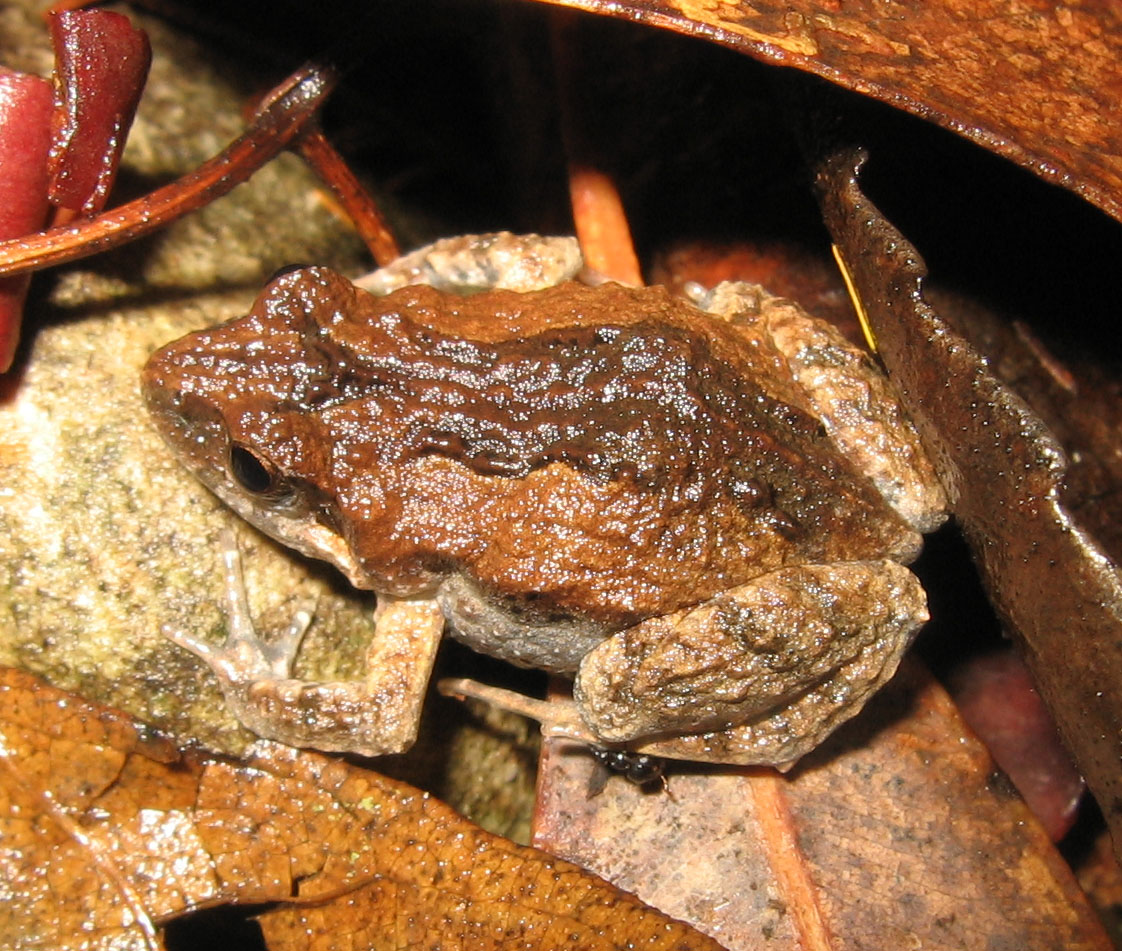
Common Eastern Froglet
Crinia signifera
A tiny, highly variable ground-dwelling frog widespread through the Mallee's wetlands and waterways, one of the most frequently heard frogs calling on damp nights.
Photo: Retama / Wikimedia Commons (CC BY-SA 3.0)

Peron's Tree Frog
Litoria peronii
A pale, mottled tree frog with a distinctive cross-shaped pupil and a call likened to maniacal laughter, found around Mallee rivers, dams and tree hollows.
Photo: LiquidGhoul / Wikimedia Commons (CC BY-SA 3.0)
Species lists are compiled from the Atlas of Living Australia, BirdLife Australia and Parks Victoria. Conservation status follows the EPBC Act and Victorian Flora and Fauna Guarantee Act where available. Records change — always check the linked source for the most current information.
Explore the parks: Murray-Sunset NP · Hattah-Kulkyne NP · Wyperfeld NP · Outdoor recreation guide